Yoga is more than a physical practice — it’s a training ground for both the mind and our physical body. Each pose creates a moment where our attention can settle, our breath can slow, and our thoughts can stop racing. When practiced consistently, yoga helps us to stay anchored in the present instead of getting pulled into unwanted thoughts that can affect our mood, behavior, and even physical health.
Yoga is often celebrated for its physical benefits, but one of its most powerful strengths lies in how it strengthens our mind. Each pose creates a moment of intentional focus — a chance to pause, breathe, and reconnect with what’s happening right now. In a world full of distractions, this ability to stay present is essential for mental and emotional health, and it naturally supports physical well‑being too along with progress in spiritual seeking.
How Yoga Supports Mental and Physical Health
Reduces Stress
Present-moment awareness lowers stress hormones, easing headaches, muscle tension, and fatigue.
Improves Emotional Regulation
Yoga helps us notice emotions early and respond with clarity rather than overwhelm.
Supports Healthy Behavior Patterns
A calm, present mind makes it easier to make thoughtful decisions and maintain balanced habits.
Enhances Physical Well‑Being
Mental stress often shows up physically. Yoga breaks that cycle by calming the mind and relaxing the body at the same time.
Sarvangasana —often called the Shoulder Stand—is one of yoga’s most respected inversions. Its name comes from sarva (all), anga (limbs), and asana (pose), meaning “the pose for the whole body.” It’s traditionally known as the Queen(power house) of Asanas because it affects nearly every system of the body. One may begin their yoga practice by using this pose as the first step.
Note:
Disclaimer: The yoga poses and practices described on this webpage are intended for general educational purposes only. They may not be suitable for everyone. Before beginning any yoga routine, please consult a qualified healthcare professional to determine whether these practices are appropriate for one’s current health condition. Follow doctor’s guidance and recommendations, especially if one has existing medical concerns, injuries, or physical limitations. Practicing yoga without proper medical advice may lead to discomfort or injury. Always listen to our body and proceed mindfully.
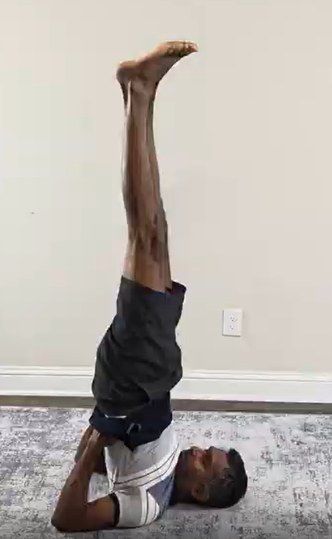
Sarvangasana is an inverted posture where the body is lifted vertically, supported by the shoulders and upper arms while the hands support the back. The chin gently locks toward the chest (jalandhara bandha), stimulating the thyroid and calming the nervous system.
Step-by-Step Procedure
1. Preparation
Lie flat on the back with arms beside the body.
2. Entering the Pose
Bend the knees and press one’s feet into the floor.
Lift the hip upwards.
Support the lower back with one’s hands, elbows shoulder-width apart.
Straighten the legs upward toward the ceiling.
Walk the hands higher up the back to lengthen the spine.
Align hips over shoulders and feet over hips as shown in the picture.
3. Holding the Pose
Keep weight on shoulders and upper arms—not the neck.
Maintain steady breathing.
Hold for 10 seconds to 2 plus minutes, depending on experience and comfort.
4. Exiting the Pose
Bend the knees toward the forehead.
Lie flat on the back
Physical Benefits
Supports thyroid & parathyroid function due to chin lock.
Improves blood circulation, especially toward the brain.
Strengthens shoulders, neck, core, and back.
Enhances digestion and reduces constipation through gravity reversal.
Relieves tired legs and reduces swelling/varicose veins.
Mental & Nervous System Benefits
Calms the nervous system, activating rest-and-digest mode.
Reduces stress, anxiety, and fatigue.
Improves sleep quality.
Other Therapeutic Benefits
Helpful for asthma, and sinusitis.
Improves metabolism and may support weight management.